
An injury can leave you with a frustrating question: “Why does it still hurt when the original injury happened weeks ago?”
You may be able to move again, but your neck still feels tight. Your shoulder may ache every time you reach overhead. Your back may feel as though one particular muscle is constantly “stuck.” Or perhaps you were involved in an accident, the initial shock has passed, but the stiffness and muscle discomfort have stayed with you.
These situations can make recovery feel confusing. You may have already tried resting. Perhaps you have used heat, stretching, massage, medication, or simply waited for the problem to disappear. But when muscle tension, trigger points, or movement restrictions continue interfering with everyday life, it may be time to look beyond simply treating the sensation of pain.
That is where Dry Needle Treatment Tennessee can become part of the conversation. At Accident & Wellness Care Center in Murfreesboro, dry needling is offered as one component of a broader approach to musculoskeletal care and injury recovery. The center emphasizes individualized treatment rather than assuming that every patient or every injury needs exactly the same solution.
The Real Problem May Not Be Where You Feel the Pain
One of the biggest mistakes people make after an injury is assuming that the most painful area is automatically the entire problem. Consider someone who develops persistent neck discomfort after a car accident. The neck hurts, so they naturally focus only on the neck.
But an injury can affect muscles and movement patterns in ways that continue after the initial event. Muscle tension and trigger points may contribute to discomfort or restricted movement, meaning that simply waiting for the pain to disappear may not address everything contributing to the symptoms.
The same principle can apply to:
- Back discomfort after an injury
- Shoulder tightness after repetitive activity
- Muscle restrictions following sports injuries
- Whiplash-related muscular symptoms
- Persistent trigger-point discomfort
- Limited movement associated with muscular tension
This is why evaluation matters.
The goal isn’t to decide beforehand that dry needling is the answer. The better question is:
What is contributing to my symptoms, and could dry needling be useful as part of my overall recovery plan?
That distinction can make the treatment conversation much more productive.
So, What Exactly Does Dry Needling Do?
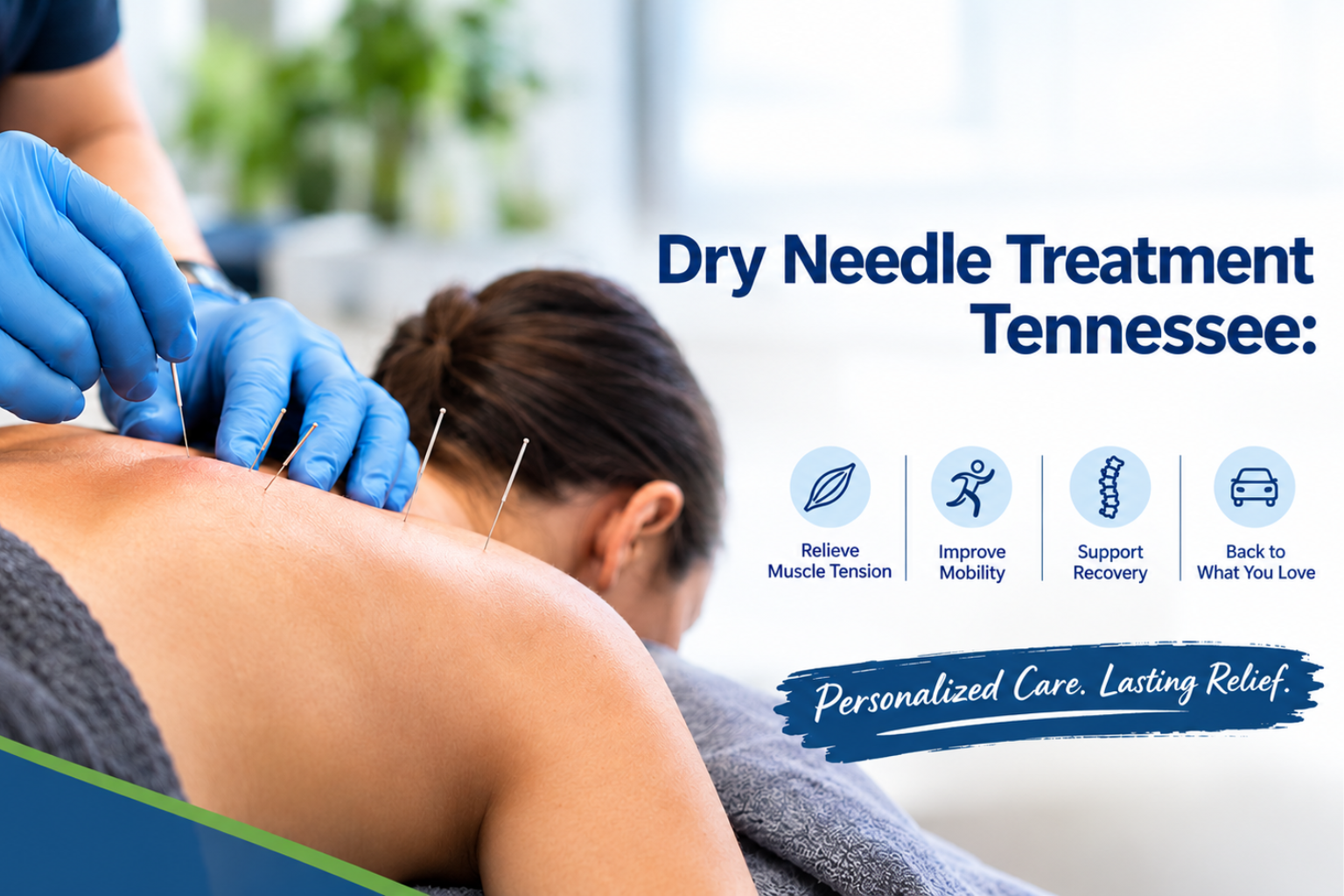
Dry needling uses a thin, solid filament needle to target selected areas of muscle and soft tissue, particularly areas involving trigger points or muscular tension. Unlike an injection, medication is not delivered through the needle. During treatment, a practitioner identifies muscles or trigger points that may be contributing to the patient’s symptoms. The needle is then placed into selected tissue. Some patients may experience a brief twitch response, pressure, or mild discomfort.
But the important point is : Dry needling is not simply about putting a needle into the place that hurts. It is used as part of a clinical approach to muscular and neuromusculoskeletal problems. For appropriate patients, it can be combined with other rehabilitation strategies rather than being treated as a standalone solution. That matters because an injury rarely exists in isolation.
When Might Dry Needle Treatment Make Sense After an Injury?
Not every injury requires dry needling. In fact, this is one of the most important things to understand before booking an appointment.
The treatment may be considered when muscular tension, trigger points, or movement restrictions are contributing to a patient’s symptoms. The target page for Accident & Wellness Care Center identifies several situations where dry needling may be incorporated into care, including neck and shoulder pain, back pain, muscle tightness, myofascial pain, certain sports injuries, accident-related muscle problems, and movement restrictions.
You may want to discuss it with a professional if:
- Your muscles remain unusually tight after an injury.
- A specific “knot” or tender area keeps returning.
- Neck or shoulder discomfort is limiting normal movement.
- Back pain is accompanied by noticeable muscular tension.
- You are recovering from a sports-related injury.
- Muscle discomfort continues after an automobile accident.
- Your movement has changed because of pain or stiffness.
- You have tried basic recovery strategies but still don’t feel like you’re progressing.
These symptoms don’t automatically mean you need dry needling.
They mean it may be worth having the underlying problem evaluated.
What About Dry Needling After a Car Accident?
This is particularly relevant because accident-related injuries can be deceptive.
A collision doesn’t have to look dramatic from the outside to leave muscles and soft tissues irritated. Symptoms associated with soft-tissue injuries can include neck discomfort, back pain, muscle tension, and whiplash-related problems. The mistake is waiting until the discomfort becomes a long-term problem before seeking an evaluation.
For an appropriate patient, dry needling may be incorporated into a broader recovery plan when muscular problems are contributing to discomfort or restricted movement. At Accident & Wellness Care Center, the approach is not simply you had an accident, therefore you need dry needling.
Instead, the center evaluates the patient and develops care around individual symptoms, condition, and recovery goals. That individualized approach is especially important after an accident because different injuries can require very different treatment strategies.
Why Combining Treatments Can Matter
Here’s another dilemma patients often face:
Should I choose dry needling, chiropractic care, rehabilitation, or something else?
In many cases, the answer isn’t necessarily one or the other. Dry needling may address a muscular component of a problem, while other therapies may address different aspects of recovery.
Accident & Wellness Care Center’s broader services include chiropractic treatment, physical rehabilitation, pain management, spinal decompression, acupuncture, and wellness-focused care. The website describes its philosophy around individualized care and helping patients restore quality of life. This creates an important distinction between treating a symptom and building a recovery plan.
For example, if muscle tension is contributing to restricted movement, dry needling may be one component of care. Therapeutic exercises, stretching, manual techniques, chiropractic care, or other rehabilitation approaches may also be considered depending on the patient’s situation.
The objective is not to collect treatments. The objective is to identify the combination of care that makes sense for the individual patient.
Dry Needling vs. Acupuncture: Are They the Same?
This is another common source of confusion. Both techniques use thin needles, but dry needling and acupuncture are different practices.
The Accident & Wellness Care Center target page explains that dry needling generally focuses on muscles, trigger points, and neuromusculoskeletal conditions, while acupuncture is a separate healthcare practice with its own approach, training, and regulatory framework. So if you have been searching online for “acupuncture dry needling,” don’t assume the two terms describe the same treatment.
If you’re unsure which approach fits your symptoms, a professional evaluation can help clarify your options.
What Does a Dry Needling Appointment Look Like?
If the idea of needles makes you nervous, knowing what happens beforehand can remove some of the uncertainty. A typical appointment begins with an assessment rather than immediately starting treatment.
Your provider may discuss:
- Where you experience pain or tightness
- How the injury occurred
- Your relevant health history
- Movement limitations
- Areas of muscular tension
- Your recovery goals
- Whether dry needling is appropriate for your condition
If treatment is appropriate, thin needles are placed into selected areas of muscle or soft tissue.
You may notice a brief twitch, pressure, or mild discomfort. Temporary soreness or tenderness can occur afterward, and your provider should explain potential benefits, risks, and side effects before treatment.
This is one reason an evaluation is so important: the treatment should be based on your condition not simply on the fact that you have pain.
Will I Need One Session or Several?
There is no universal answer. The number and frequency of treatments depend on factors such as your condition, symptoms, response to care, and overall treatment plan. The Accident & Wellness Care Center’s own FAQ specifically notes that there is no universal number of dry needling sessions for every patient.
So be cautious of anyone promising that one specific treatment or a predetermined number of sessions will solve everyone’s problem. A better approach is to monitor how your symptoms and function respond and adjust care accordingly.
Why Accident & Wellness Care Center?
Choosing a provider for injury recovery is about more than finding someone who offers a particular technique.
You want to know:
Will someone actually look at the bigger picture?
Accident & Wellness Care Center is based in Murfreesboro, Tennessee, and its website identifies Dr. Victor Poletajev, M.A., D.C., noting 37 years in practice and a focus on patient care. Its services extend beyond dry needling to areas including chiropractic care, acupuncture, spinal decompression, nutrition, neuropathy care, and car-wreck-related care.
That broader range can be valuable when your symptoms don’t fit neatly into one category. Someone recovering from an accident, for example, may be dealing with more than one source of discomfort. Someone with chronic muscle tension may have movement or musculoskeletal factors that deserve evaluation as well. The goal is to understand the person not just the painful spot.

A Simple Way to Decide Your Next Step
If you’re wondering whether Dry Needle Treatment Tennessee could be appropriate for you, don’t start with the question:
Do I need dry needling?
Start with these:
- What is causing my pain or movement restriction?
- Is muscular tension or a trigger point contributing to it?
- Have my symptoms continued longer than expected?
- Is the problem affecting work, exercise, sleep, or everyday activities?
- Would dry needling make sense alongside other treatment options?
Those questions lead to a much more useful conversation with a healthcare professional.
Don’t Let “I’m Still Hurting” Become Your New Normal
Recovery doesn’t always happen in a straight line. Sometimes the initial injury improves, but a stubborn area of muscle tension remains. Sometimes an accident changes the way you move, creating new discomfort. Sometimes a sports injury heals enough for normal activity, but certain movements still feel restricted.
You don’t have to guess what is happening. If persistent muscle tension, pain, trigger points, or limited mobility are affecting your daily life, a professional evaluation can help you understand the available options.
For patients looking for Dry Needle Treatment Tennessee, Accident & Wellness Care Center in Murfreesboro provides dry needling as part of a broader approach to musculoskeletal care and injury recovery.
Ready to stop guessing about your next step? Contact Accident & Wellness Care Center to discuss your symptoms, learn about your treatment options, and find out whether dry needling could have a place in your personalized recovery plan.
Frequently Asked Questions
Is dry needling only for athletes?
No. Although dry needling may be incorporated into care for certain sports injuries, it may also be considered for people experiencing neck or shoulder pain, back pain, muscle tightness, trigger-point discomfort, movement restrictions, and some accident-related muscular problems.
Can I get dry needling after a car accident?
It may be appropriate for some patients when muscular tension or related problems are contributing to symptoms. However, an evaluation should determine whether it is suitable for your particular injury.
Is dry needling the same as getting an injection?
No. Dry needling uses a thin, solid filament needle and does not inject medication into the treated tissue.
How do I know if dry needling is right for me?
The best way is to have your symptoms and condition evaluated by an appropriately qualified healthcare professional. Dry needling is not appropriate for every condition or every patient.
Can dry needling be combined with other treatments?
Yes. Depending on the individual’s needs, dry needling may be incorporated alongside therapeutic exercises, stretching, manual techniques, chiropractic care, or other rehabilitation approaches.
Where can I find Dry Needle Treatment Tennessee?
Accident & Wellness Care Center provides dry needling in Murfreesboro, Tennessee, as part of its broader musculoskeletal and injury-recovery services. The center is located at 5107 Bryson Trail, Murfreesboro, TN 37129.