
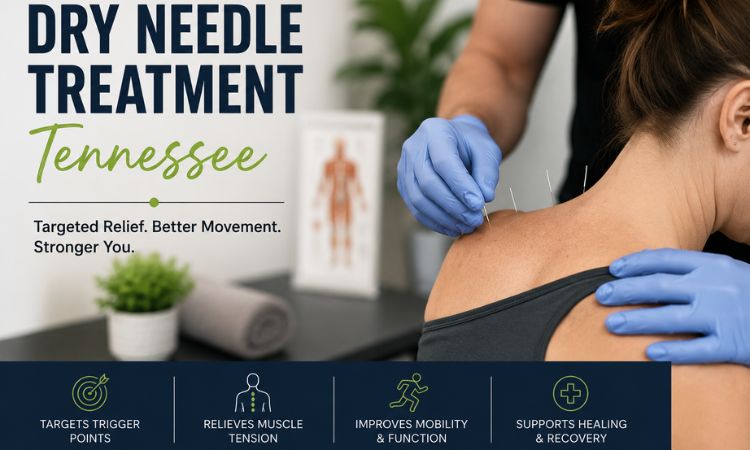
If muscle pain, tightness, trigger points, or movement limitations are affecting your daily life, dry needle treatment in Tennessee may be an option to discuss with a qualified healthcare professional. Dry needling is a technique that uses thin needles to stimulate selected muscular and myofascial areas and may be included as part of a broader treatment plan.
At Accident & Wellness Care Center in Murfreesboro, Tennessee, dry needling is offered as part of care for musculoskeletal concerns. The appropriate treatment depends on your symptoms, physical condition, medical history, and recovery goals.
What Is Dry Needle Treatment?
Dry needling is a treatment technique that uses a thin, solid filament needle to target specific areas of muscle and soft tissue. Practitioners may use it around trigger points or areas of muscular tension as part of a plan designed to address pain and movement limitations.
The technique is different from an injection because no medication is injected through the needle.
Dry needling may be used alongside other rehabilitation approaches rather than as a standalone treatment. Your provider can determine whether it is appropriate after evaluating your condition.
How Does Dry Needling Work?
During treatment, a practitioner identifies muscles or trigger points that may be contributing to your symptoms. A sterile, thin needle is then inserted into selected tissue.
Depending on the technique and treatment area, stimulation may produce a brief local twitch response. Some patients may experience a short sensation of pressure, twitching, or discomfort.
The goal is not simply to insert a needle into a painful area. Instead, dry needling is used as part of a clinical approach to addressing muscular and neuromusculoskeletal problems.
Dry Needling vs. Acupuncture
- Dry needling and acupuncture both use thin needles, but they are different practices.
- Dry needling generally focuses on muscles, trigger points, and neuromusculoskeletal conditions.
- Acupuncture is a separate healthcare practice with its own approach, training, and regulatory framework.
- Tennessee law also distinguishes physical-therapy dry needling from the practice of acupuncture.
If you are unsure which treatment may be appropriate, a qualified healthcare professional can evaluate your symptoms and explain your options.
What Conditions May Benefit From Dry Needling?
Dry needling may be considered for certain musculoskeletal conditions involving muscle tension, trigger points, or movement limitations.
Depending on an individual’s condition, it may be incorporated into care for:
- Neck and shoulder pain
- Back pain
- Muscle tightness
- Myofascial pain
- Trigger-point-related discomfort
- Certain sports injuries
- Some accident-related muscle problems
- Movement restrictions
Research does not suggest that dry needling works identically for every condition or every patient. It is best viewed as one possible component of an individualized treatment plan.
Dry Needling for Back and Neck Pain
Back and neck discomfort can develop after an injury, repetitive activity, poor movement patterns, or other musculoskeletal problems.
When muscular tension or trigger points contribute to symptoms, dry needling may be considered alongside other treatment strategies. These may include therapeutic exercises, stretching, manual techniques, and other rehabilitation approaches.
The first step should always be identifying the potential source of your symptoms rather than assuming that dry needling is the right solution.
Dry Needling After an Auto Accident
Auto accidents can result in soft-tissue injuries, muscle tension, neck discomfort, back pain, and whiplash-related symptoms.
For appropriate patients, dry needling may be incorporated into a broader recovery plan when muscular problems contribute to discomfort or restricted movement.
Accident & Wellness Care Center focuses on evaluating patients and developing care around their individual needs rather than using exactly the same treatment for every injury.
What Should You Expect During Treatment?
Your appointment may begin with an assessment of your symptoms and relevant health history. The practitioner can identify areas that may benefit from treatment and explain what the procedure involves.
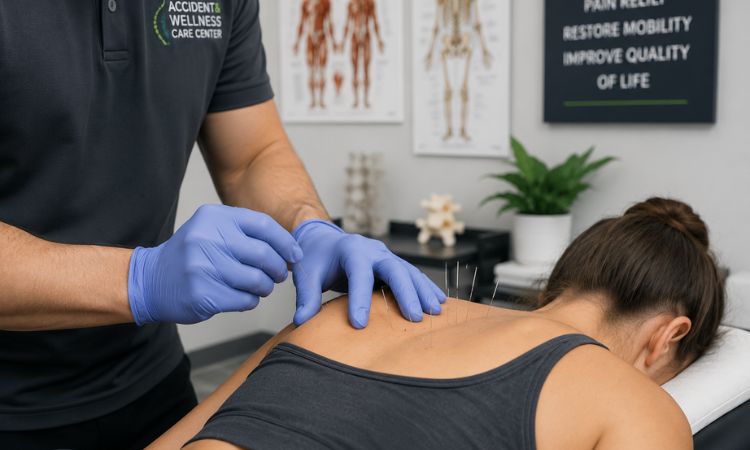
During dry needling, thin needles are placed in selected areas. You may notice a brief twitch, pressure, or mild discomfort.
Temporary soreness or tenderness can occur afterward. Your provider should explain the potential benefits, risks, and side effects before treatment.
Is Dry Needling Safe?
Dry needling should be performed by an appropriately licensed and trained professional who follows applicable safety requirements.
Tennessee’s physical therapy rules include specific education and competency requirements for physical therapists who perform dry needling. The current rules require relevant musculoskeletal and neuromuscular education, trigger-point and pain-related education, universal precautions, and specific dry-needling instruction.
Potential temporary effects can include soreness, tenderness, or minor bruising. Your provider can discuss risks and whether the treatment is appropriate for your specific circumstances.
Why Choose Dry Needle Treatment in Tennessee?
Choosing a local provider gives you an opportunity to discuss your symptoms directly with a healthcare professional and develop a treatment plan based on your individual needs.
For people searching for dry needle treatment in Tennessee, Accident & Wellness Care Center in Murfreesboro provides dry needling as part of its broader approach to injury recovery and musculoskeletal care.
Instead of relying on one technique for every patient, treatment can be selected according to the individual’s symptoms, condition, and goals.
Get Professional Guidance for Your Pain and Recovery
If muscle tension, pain, or an injury is affecting your mobility or everyday activities, professional evaluation can help you understand your treatment options.
For those searching for Dry Needle Treatment Tennessee, Accident & Wellness Care Center in Murfreesboro offers dry needling as part of a broader approach to musculoskeletal care and injury recovery. Contact the center to discuss your symptoms and determine whether dry needling may be appropriate for your individual needs.
Frequently Asked Questions
Q1. What is dry needle treatment?
Dry needle treatment, commonly called dry needling, uses thin needles to stimulate selected muscular or myofascial areas. It may be used as part of care for certain pain and movement-related conditions.
Q2. Does dry needling hurt?
Some people experience little discomfort, while others notice a brief twitch, pressure, or mild sensation during treatment. Temporary soreness may occur afterward.
Q3. Can dry needling help back pain?
It may help some patients when muscular tension or trigger points contribute to back pain. A professional evaluation is important before deciding whether it is appropriate.
Q4. Can dry needling help neck pain?
Dry needling may be considered for certain muscular causes of neck discomfort. Your provider should first evaluate the cause and severity of your symptoms.
Q5. Is dry needling the same as acupuncture?
No. Although both techniques use thin needles, dry needling and acupuncture are distinct practices with different approaches and regulatory requirements.
Q6. How many dry needling sessions will I need?
There is no universal number of sessions. Treatment frequency depends on your condition, symptoms, response to care, and overall treatment plan.
Q7. Can dry needling be used after a car accident?
It may be included in a rehabilitation plan for appropriate patients when muscular tension or related problems are contributing to symptoms. An evaluation should determine whether it is suitable.
Q8. Who performs dry needling in Tennessee?
Tennessee has specific scope-of-practice and training requirements. For physical therapists, current rules establish education and competency requirements for performing dry needling.